Thursday, 28 February 2013

Elements of game design: Part 2


These blog posts are really visually unstimulating.. I apologise for that.
So what is an Art Director? From the looks of things, they’re essentially the bees knees, the commanding officer, the over lord. They’re responsible for setting not only the visual tone, quality and style of the game but also have an indirect responsibility to every object, texture, level, character and effect in a game. They must consider how each single object, character, prop, set, location and each individual aspect of these areas will look from any area in the game in any level. That’s a hell of a lot for a single person to be responsible for if you ask me. Hell, I can’t even imagine the stress that would come with such a job title.
Personally I believe it’s an incredibly creative role – being responsible for each aspect of the game, making sure the appearance is correct and in place, and focusing on a variety of detailing in the game in order to portray what they want. Simple things like what colours would correctly define the mood of the environment, to in game item detailing in textures or environment accuracy. The art director works closely with the game designer to shape the game world, and attempts to communicate their vision of the game to teams of artists. In order to convey this vision in an accurate manner which will be understood by all, yet leave room for enough interpretation to have a more collaborative feel to a design; I’d say they’d have to be incredibly creative. Just because they aren’t creating or painting the items first hand, it doesn’t mean there would be no creative process necessary for the world of a game to envisioned.
In comparison with a film art director, I don’t think there’s much difference - especially when you consider the increasing cinematic narrative styles popping up in video game stylisation. They both go through similar visualisation processes with story boards and having to portray an idea through visual means. And then the accuracy, realism of certain aspects, in reference to films 3D elements when necessary and CGI being pulled off with correct texture detailing, then concepting for characters, personalities, clothing and so on.
If I wanted to become an art director? Oh jeez I’d have to improve a lot. My ability to concept would have to improve about tenfold, alongside my technical ability as well as colour knowledge and application and understanding the psychology behind such apparently simple aspects. My knowledge on stylisation and application would need to improve, as well as perspective and the way layouts of areas or scenes work. Oh, and self-confidence with my ideas, the way I handle stress and responsibility, and the ability to talk to large groups without freaking out… the usual thing I end up having to improve on. 

Elements of game design: Part 1


Gameplay. What is gameplay? Basically it’s the way that players interact with a game. This involves the pattern defined through the game rules, connection between player and a game, challenges and overcoming them, plot and player's connection with it.

There’s said to be 9 different gameplay styles – Asymmetric, Cooperative, Emergent, Hack and slash, Leveled, Micromanagement, Nonlinear, Passive and Twitch gameplay - each of these attempts to create a unique way to play a game, whether it is through reaction speed or aiding one another. However, as each style is not necessarily limited to a single game genre you have to question the uniqueness of that experience. In the end, no matter what the gameplay style it relies on the playability of the game and how the player reacts and interacts with the interface presented to them – the more repeated an interface, the easier a game will be able to play and understand. In theory anyway. Sometimes this repetition can become drab and boring, even within the same game. I personally know that the due to the over use of a single style in “Borderlands” found myself leaving the game untouched for a few months.

Nowadays, more mainstream games tend to be developed in phases. Initially starting with pitches, prototypes, and the design documents and moving onto full-scale development once the idea is approved and funding received. A team of about 20-100 people, each with various responsibilities, focuses on the full scale development - such as designers, artists, programmers, testers, etc. The games go through development, alpha, and beta stages until finally being released.

Game designers focus on the content and rules of a game, as well as the gameplay, environment, storyline, and characters. The majority of the time, these designs are simply modifications of pre-existing ideas but focusing on upping the graphics and giving a more immersive experience – which arguably isn’t always the case. Different genres within the design process will possibly need to consider alternative things whilst concepting – for example the psychology behind certain aspects in order to create an emotive response from the player, whether it be a characters personality and actions, aspects of a game which may follow a “horror” genre, or the colour palettes used to portray certain themes, emotions and certain game mechanics – for example whether an area is hostile or safe. Then again, with the constant merging of genres within designing video games a lot of these would possibly cross over.

There are multiple designer types for each game, sometimes smaller companies or indie companies relying solely on a single person to do all of it – from lead design work, to game mechanics designer, level and environment designs as well as writing the narrative.

“I had no special training at all; I am completely self taught. I don't fit the mold of a visual arts designer or a graphic designer. I just had a strong concept about what a game designer is. Someone who designs projects to make people happy. That's a game designer's purpose. 
Toru Iwatani” 

What a cunt. In my opinion, being a game designer isn’t any different from other designers – you have a similar process but with a separate outcome. “Don’t fit the mold”. Unique snowflake syndrome much? From what I can tell, design processes in different areas such as graphics are very similar to the process taken for game development and design, just alternative considerations and outcomes are considered and produced.

Personally, when I play games I look for an unnoticeable repetition on quest/mission style, with well panned out levelling. More importantly however, is a good story line, with a large amount of lore behind it. A level of interaction and control over a game, with interesting narrative and engaging dialogue, not to mention a level of beauty to the games appearance.. I’m a super fussy game player I guess.

Saturday, 2 February 2013

Naked ladies everywhere.

Term two began, and the reintroduction of life drawing on the syllabus was a lovely start. If no one could have guessed, I enjoy drawing the human form.. whether I'm good at it or not doesn't matter to me, finding natural curves on something is what I love.
The same life drawing models as the foundation year was quite nice, as I'm sort of used to the way their body looks. Although I'm somewhat disappointed there aren't any males... not for the heterosexual "oh so dreemy"  aspect but because I'm not used to drawing the male form, and it would have been enjoyable to do something new in that aspect.
The first session was simple pencil sketches on any paper we deemed appropriate, so I decided to go with my A3 sketchbook - usually I like to focus on smaller scale with the human form, I can work quicker and mistakes aren't as noticeable - and as I pick my work apart piece by piece it gives me a break.

1 minute poses
1 minute poses


2 minute poses

2 minute poses

5 minute poses

5 minute poses
15 minute poses
So as seen, despite working on a larger scale I still naturally go for a smaller image.. irritating but something I will soon overcome I'm sure. The drawings themselves didn't turn out half as bad as I anticipated, seeing as I hadn't done life drawing for many months. It's made me realise my drawings don't necessarily start in a logical way - with the head and working down, or marking out the scale - but instead finding the most interesting curve and working around it - so the curve on the shoulders, breasts or spine. I find it somewhat peculiar that this helps my issues with scale, so I guess it's something I'll continue when I don't find the time to measure a pose.
Second session of life drawing we were given charchol to work with. I loathe charchol with a passion - it's messy, wasteful and just difficult to work with. It's obviously visible with the first sketches, the proportions are off, and they're sketchy and heavy handed. The longer poses were easier to work with but I still find myself working too small, considering this session was on A1 paper it's a bit disappointing how I seem to limit myself. 


I find myself  pleased with the "final" outcome of this session, surprising myself with the foreshortening representation and reflection on the pose actually seeming like it's reclined. And the rendering on the body turned out much better than I anticipated - an improvement from the beginning of the session.


The third session continued on charchol, but instead on mid-toned paper and introducing highlights to the scene. I apologise for the quality of these, they're photographs and I went a little mad with the hairspray, hence the damp appearance to some of them..


 #
I really hate the way blogger displays pictures... But yes, these images were temperamental to produce. However it's interesting to see how my ability to use charchol has improved in such a small amount of time, even if it isn't that much. Foreshortening and scale werent working so much that session, but shading was improved, as well as the weight of the line. Hopefully I carry on improving, or I'll at least plateau in a somewhat decent place.. more likely the latter but I'll somewhat content with that.
There has been additional life drawing sessions after these, however I am yet to photograph my work and I feel this blog has enough images spamming up the place as it is. So I shall bid you a semi-drunken adeau until next time.

Wednesday, 30 January 2013

I done gone did a presentation

Well, tried to. And, well, it sucked. Majorly. If there was an award for such a catastrophic suck, I do believe I would have been awarded it post haste.. Presentation not working, running out of time, the inevitable tear stricken panic attacks before and after along side sickly feeling and forgetting to breathe.. yeah, I don't do public performances brilliantly. I find it a bit amusing that it turned out exactly how I thought it would when I first read at Christmas we were doing presentations in term 2.

My tae kwon do instructor recently has been lecturing the children - and by this I mean ages 5 to 13 - on confidence in their gradings, saying if you don't have it, then quite simply fake it. I've heard this multiple times in my life, as public speaking or interaction with someone of whom I don't know is something I've always struggled with. This time it's resulted in me feeling like nothing more than a pathetic child for my response to such a simple task, the fact I can't even fake confidence in such a simple area which is me talking about something I like or dislike is incredibly disheartening.

I guess it's a good thing there's a second attempt at the same presentation, maybe this time I can appear less child like and make the amount of time I prepare for this actually show through my nerves. I can shorten the presentation easily, narrowing down what I focus on from my review and furthering it.. but this means more talking, more analysis and attempting to stretch it over the space 5 minutes which seems almost impossible. I've heard people say 5 minutes is a short amount of time.. I really disagree. Super disagree.
I can perform a pattern or spar for 3 minutes, do a grading in 30 amongst a group of at least 19 others, where if you make a mistake it's incredibly obvious, and I'll be incredibly nervous and rush everything. But speaking for 5 is about a million times more difficult than those. Just got to tell myself what I always do when I'm struggling with something - "get over yourself, you're being pathetic."

This feels like it turned into a rant more than an analysis of why I sucked... oops. I should probably work on that too haha.

Monday, 14 January 2013

So you know I hate game reviews, right?


I don’t claim to be the most knowledgeable when it comes to games, in fact I consider myself quite the opposite. However I know what I like, and what I dislike and I can say pretty legitimate reasons as to why. And after thoroughly enjoying the adventure role-playing game Fallout 3 to the point of exhaustion, and to the extent that mods could not salvage the game, it’s safe to say that Fallout: New Vegas was a must have in my gaming library. The introduction of Obsidian Entertainment in the developing team piqued curiosity – collaboration between two companies could go either way, especially when involving a series which I believe to be beautifully put together. In my hopes and dreams, it could only live up to the previous visuals and open-world game play that Bethesda seem to flourish in designing, with mutants and a story that was immersive and involving. It’s safe to say that, in my opinion of which may be valued or otherwise, I was thoroughly disappointed in this game.
The initial story is interesting - with the initial panning cinematic scene displaying multiple aspects of the games various quests and introducing the all new fractions or tribes within the game, as well as where they stand in their alliances – definitely worthwhile to watch as each scene revealed is relevant to the environment and story, showing threats, iconic areas and somewhat safe-zones. Cutting to a scene where your in-game self is revealed. The back story varies away from the usual vault dweller start. You play a courier traveling the Mojave wastes of Nevada, where things have taken a turn for the worst as your delivery is robbed from you in cold blood. How exciting, right? A quest for revenge, how fun – a different taste to the lone saviour route approached in previous games in the series- referring to the water chip retrieval in Fallout, the GECK retrieval in Fallout 2, and the water purification/Dad retrieval in Fallout 3. Although it seems rather farfetched someone surviving a head shot in the given environment, you are retrieved by a robot and taken to the doctor of a close by town – this initialising the character creation.
The story itself is immersive until you track down your “killer” - Benny, the leader of ‘The Chairmen’, of whom you find to have a large scheme under way involving the delivery you were making. From here on I found my own experience with the game being somewhat pointless – the playable character had very little to no reasoning for carrying on or fulfilling Benny’s plans, with the lack of background to the characters’ name furthering yourself from any form of decision making the game attempts to portray – it lacked the empathy or links the previous games had, the feeling of community from the vault environment or family ties, as well as the dependency on you as the player to fulfil the quest.
Moving onto the gameplay. I mentioned the character creation, something I enjoy greatly because… well, pretty people and stuff. I was disappointed with the lack of advancement from Fallout 3, it was essentially the same. Although the games aren’t incredibly distanced from one another I would have hoped for a more extensive decision when choosing the right hair for my kick-ass female beast. The visuals were decent, nothing new however they did add a certain aesthetic to the game that I personally liked – no intensely baby faced characters within the preset faces, yet the choice being there to have a young enough character for the job of a courier to be believable. The levelling system was done quite well, with the achievements of perks coming every 2 levels – a more balanced way to enhance the game, and I found myself spurred on to advance that additional level in order to gain this little aid, or fun add on. The level cap, however, is still an issue – a somewhat lazy level 30 for the base game is a frustrating level for someone who will play the game extensively and enjoy the reward of a stronger character.
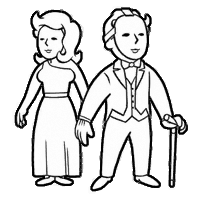
The research that has gone into the aesthetics of the game is astounding, with the multiple themes introduced and NPC backgrounds being truly worthwhile. I usually judge these things in the way as “would I kill that person to steal their clothes?”.. moving on. The contrast between the two extremes of a civilised society and the ravenous raiders is clearly seen and performed effectively – mainly focusing on the white glove society, and their more dark background.
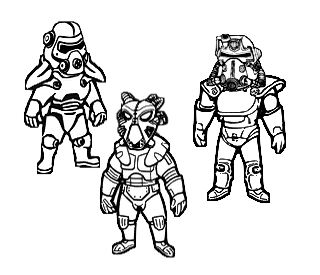
Along-side this the clash of 1950’s appearance to clothing and environmental aspects such as billboards and the more modern power armour, and scrap armour. In addition to this, the fact that the majority of the armours or clothes are not overly changed for the different sexes is a brilliant aspect, with revealing outfits appearing in the same context for both genders and the link to eras keeping everything else tasteful and appropriate to the environment. However, these aren’t necessarily new aspects to the game - never the less this fact does not take away from their initial effectiveness.
The way the influence of tribes/fractions is an additional aspect of which has been done in an interesting way, and thought out well – the influence in one tribe that will have been built up through decision-making quests destroying or cancelling out your reputation with another. On more than one occasion I found myself debating with the pros and cons of aiding one fraction over another, debating the possible effects and reputation it’d give my character. The irreparable damage that can be caused to one save is an awesome feature.
Something this game really didn’t perform on was the quality of the voice acting, as multiple times I found a mismatched emotion to a situation when interacting with certain NPC’s. For example, on one occasion on approaching a small town you will gain the opportunity to interact with a running man – he will speak about how he won the right to live through a lottery, his dialogue being super excited and relieved. Upon saying goodbye to him, his response will be an emotionless, bored-sounding “bye”. The mismatch is overly noticeable, and lazy. An additional example will be an otherwise non-interactional NPC, whom will ask you what you want, upon bidding them farewell they will say “Later” with what can only be described as a hiss of malice. In addition to this, the overly repeated same-voiced reactions from non-interactional NPCs gets incredibly boring, I personally found myself avoiding civilised areas from the constant tough-sounding “you eyeballin’ me” from every guy in the area.
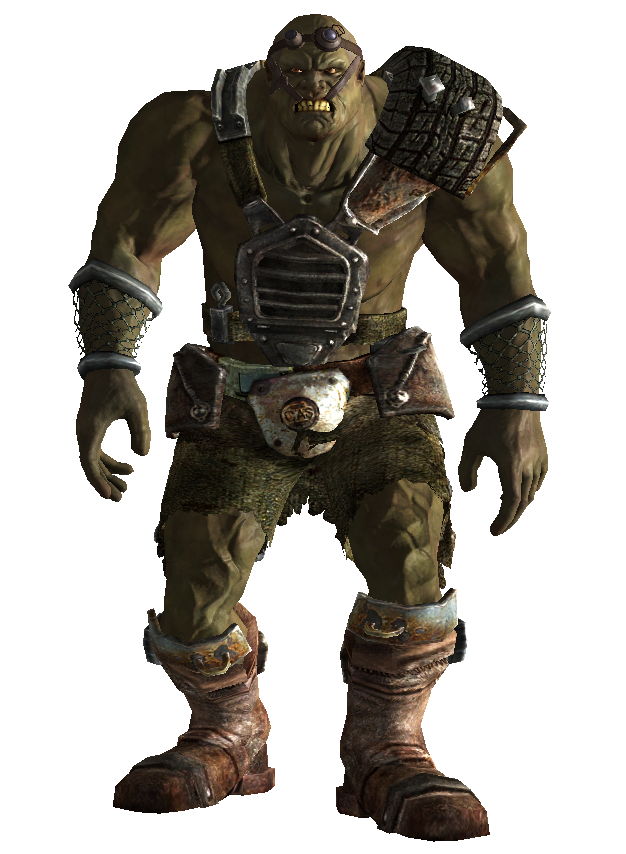
An enormous breaking point on the voice acting comes from the super mutants. These mutated humanoid creatures are the result of the FEV – the forced evolutionary virus - and brutish in every way, including their gristly vocals which feature throughout the entirety of Fallout 3 and the beginning of Fallout: New Vegas. However, for some peculiar reason which completely escapes me, there are those with the ability to speak fluent, clear English with no distortion to their voice. It’s unfitting and completely breaks the immersion and design of the creatures – of whom are supposed to be monstrous and relentless.
The final area of gameplay I wish to touch upon is the miscellaneous aspects of the game. The non-story based quests are extensive in amount and I believe they are what make the game what it is – varying from the more serious town-aiding ones to the amusing “help ghouls get into space because why the hell not”. Furthermore, in more than one occasion the main quest has led to one of these, of which I found thankful as it played as a silver lining to an otherwise dull adventure. The random events that occur whilst wondering the wasteland are an additional plus, giving the open world environment a reason to be explored and for quick-travel to only be used in severe bouts of laziness or repetitive travel-to-and-from quests. In addition to this, the introduction of a survival mode was an incredible addition to the game – an additional immersive aspect which increases the reason for exploration and inventory housekeeping for survival reasons.
The environment itself is reason to ignore this quick-travel option, as it’s drab appearance carries its own beauty as well as the overabundance of dangerous areas are immensely fun to challenge yourself with passing through – for example the Deathclaw infested gully linking the first town you start in to The Strip, a more direct route for the brave who are willing to encounter the reintroduced ranking system for one of the more deadly creatures in the wasteland – varying from babies, to the Legendary Deathclaw.
Overall, this game was a disappointment, yes. For multiple reasons, all being noticeable and bad enough for create a reason for me to not play this game on multiple occasions. However, for those who don’t care for a decent main story quest or the full immersive, emotional-based state I personally enjoy to get into whilst playing games such as this then it’s definitely worth playing and enjoying... and I might have just contradicted myself a lot. Oh dear.

Sunday, 13 January 2013

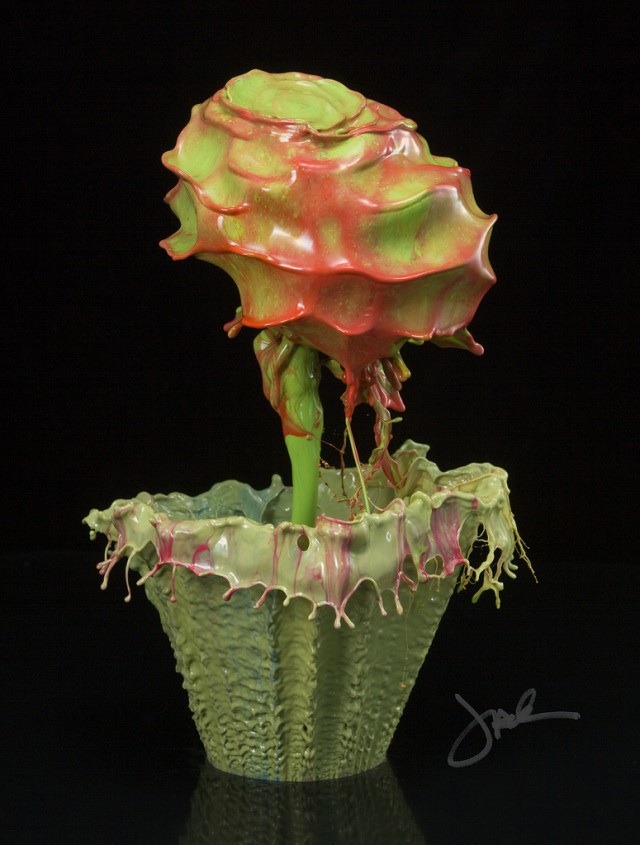
Not game art related, but I stumbled upon the artist Jack Long, and was amazed by his splash art pieces - mainly his flowers. Definitely work looking at and appreciating the timing and precision going into such a random use of materials.